
 .
.
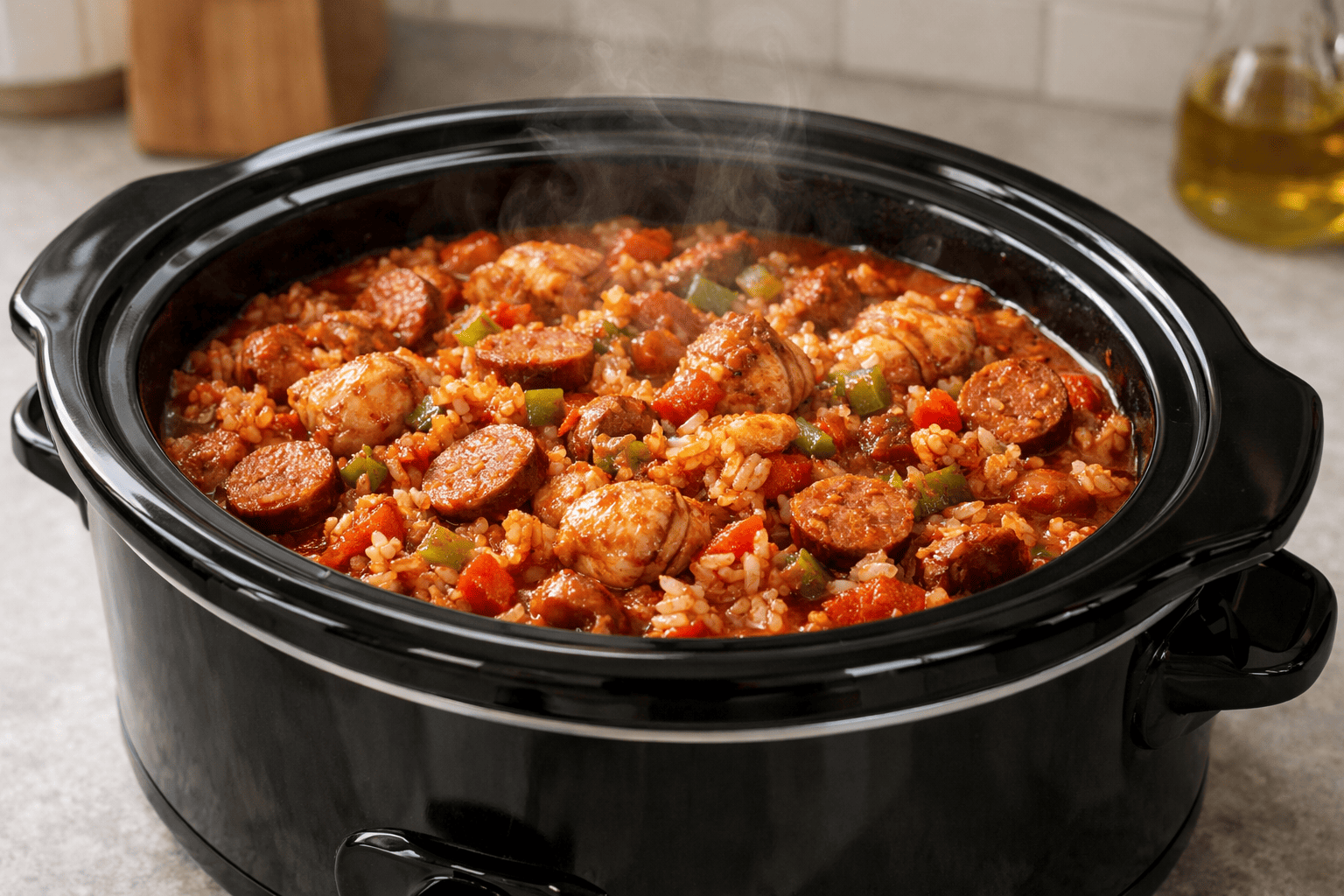
You can prepare a full pot of jambalaya on a busy weekday by letting a slow cooker handle the long simmer.
Instead of standing over a stove and managing heat, you add chicken, sausage, and vegetables in one short prep session, allowing the cooker to work on its own during a busy day.
As the dish cooks, the chicken becomes tender, the sausage releases flavor, and the broth thickens while you work, rest, or run errands, with no constant stirring required.
Keep reading to discover a simple cooking method that preserves the structure and character of traditional jambalaya.
Key Takeaways
- Low, steady heat in a slow cooker tenderizes chicken and blends spices without stirring.
- Adding uncooked rice during the final 30 minutes keeps it firm instead of mushy.
- Simple prep earlier in the day becomes a rich one-pot meal by dinner.
Gathering Your Cajun Pantry Staples
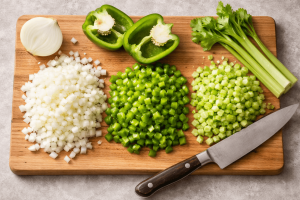
Most jambalaya starts with the same foundation. A cutting board, a knife, and the Cajun holy trinity: onion, green bell pepper, and celery. These vegetables may seem basic, but they carry much of the flavor throughout the entire dish.
Green bell pepper plays a specific role in jambalaya. It adds a mild bitterness rather than sweetness, which balances the richness of sausage and broth. Red or yellow peppers contain more natural sugar and can push the dish toward a sweeter profile. Some cooks prefer that variation, but green bell pepper is closer to the traditional Cajun base.
Celery may seem subtle at first, but long cooking draws out its savory depth. It helps connect the vegetables, meat, and seasoning into one unified flavor. Without celery, the base can taste flatter and less rounded.
Knife skills do not need to be precise. Chop the onion, bell pepper, and celery into rough half-inch pieces. They soften during the long cook and blend naturally. If time is limited in the morning, these vegetables can be chopped the night before and stored in the refrigerator.
Choosing the Right Chicken and Sausage
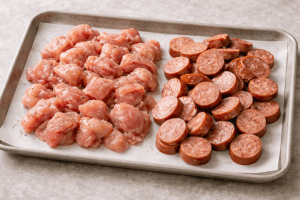
Boneless, skinless chicken thighs are the best choice for slow cooker jambalaya. They contain more fat and connective tissue than chicken breast, which helps the meat stay moist and tender during long cooking. Chicken breast can be used as an alternative, but it tends to dry out when cooked for extended periods
Cut the chicken into bite-size pieces so it cooks evenly and distributes well throughout the dish. Keeping the pieces uniform also helps maintain a consistent texture in every serving
Sausage defines much of the dish’s character. Smoked chicken sausage keeps the flavor mild and balanced, especially when using chicken sausages that are gluten free to ensure the dish remains accessible without sacrificing texture. Andouille sausage adds stronger smoke, garlic, and spice, moving the dish closer to Louisiana tradition. You may use one type or a mix of both depending on preference.
Slice the sausage into rounds. This shape allows fat to slowly melt into the broth and season the entire pot instead of staying concentrated in one area.
For food safety, the Centers for Disease Control and Prevention states, “Cook poultry to an internal temperature of 165°F to kill germs”. [1]
Pantry Ingredients That Complete the Dish
The remaining ingredients are simple and widely available:
- One 14-ounce can diced tomatoes with juices
- 3 cups chicken broth, preferably low sodium
- 3 cloves garlic, minced
- 2 tablespoons Cajun seasoning
- 1 teaspoon dried thyme
- 2 bay leaves
- Worcestershire sauce, to taste
Low-sodium broth is strongly recommended. Sausage and Cajun seasoning already contain salt. In a closed slow cooker, salt does not escape through evaporation. Starting with less prevents the dish from becoming overly salty as flavors concentrate.
Salt can always be added later. It cannot be removed once concentrated.
Choosing the Right Rice
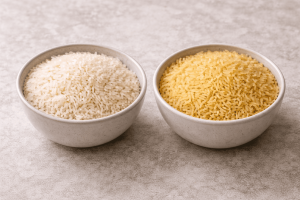
Rice is essential to jambalaya. Use 1½ cups long-grain white rice. Avoid instant rice, which cooks too quickly and becomes overly soft. Parboiled or converted rice works well because it holds its shape during longer cooking. Long-grain rice should remain separate and tender, not clumped together.
Rice texture determines whether jambalaya feels hearty or soupy. Proper timing matters more than the rice brand. Adding rice too early causes excess absorption and starch release, while adding it too late prevents full cooking.
Rice choice also affects storage and reheating. Long-grain rice maintains structure after cooling, which helps leftovers stay balanced instead of dense. Short-grain rice releases more starch and can cause the dish to thicken too much once chilled.
Rinsing rice is optional and depends on texture preference. Unrinsed rice adds light starch that slightly thickens the broth. Rinsed rice stays more separate and clean in texture. Both approaches work if the rice is added at the correct stage.
Rice texture determines whether jambalaya feels hearty or soupy. Proper timing matters more than the rice brand. Adding rice too early causes excess absorption and starch release, while adding it too late prevents full cooking.
According to Harvard T.H. Chan School of Public Health, Long-grain rice has less starch on its surface, which helps keep the grains separate after cooking.
Rice Types for Slow Cooker Jambalaya
Rice Type |
Texture After Cooking |
Suitability for slow Cooker |
Notes |
Long-grain white rice |
Firm, separate grains |
Excellent |
Best balance of structure and absorption |
Parboiled (converted) rice |
Very firm, holds shape |
Excellent |
Resists overcooking during long heat |
Short-grain rice |
Soft, sticky texture |
Poor |
Releases excess starch |
Instant rice |
Mushy, breaks down |
Not recommended |
Cooks too fast for slow cooker timing |
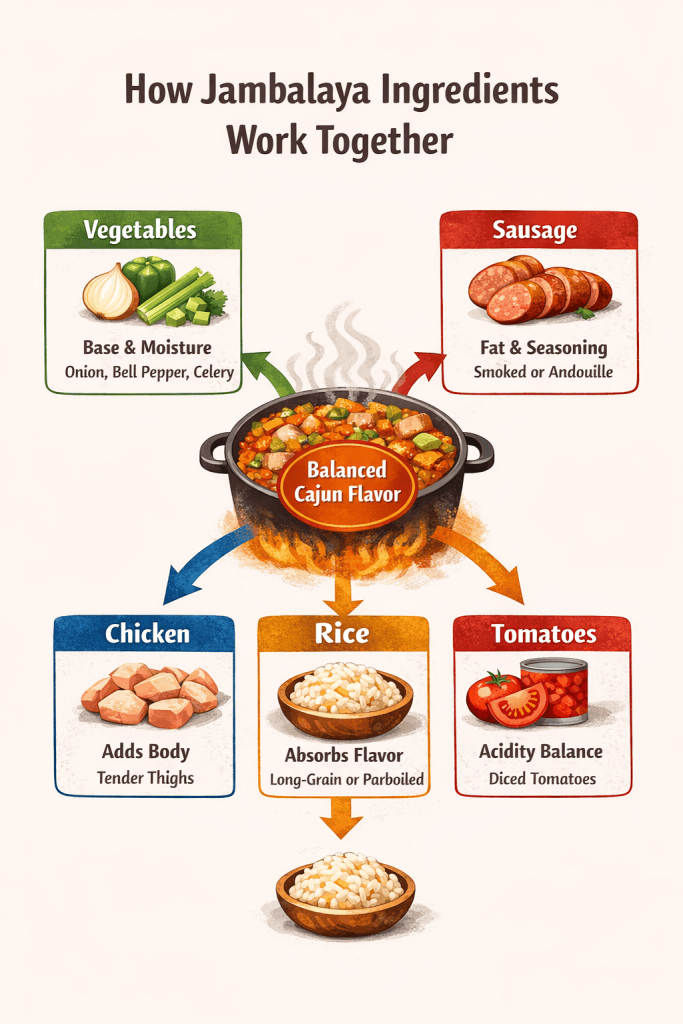
Why These Ingredients Work Together
None of these ingredients are complex or expensive. That is the purpose of jambalaya. It is meant to stretch simple staples, feed many people, and fill a large pot without stress. [2]
Each ingredient plays a clear role. Vegetables build the base, meat adds richness, rice absorbs flavor, and seasoning ties everything together. Removing or replacing one element changes the balance of the entire dish.
Jambalaya relies on balance between fat, liquid, and starch. Sausage releases fat, chicken adds body, and tomatoes provide mild acidity that prevents flavors from tasting flat. Broth distributes seasoning evenly during long cooking instead of concentrating it too early.
Vegetables also manage moisture and structure. Onion and celery release liquid early, which protects against scorching. Bell pepper softens later and helps maintain texture. Rice absorbs seasoned broth at the end and locks in the developed flavor.
How Jambalaya Ingredients Work Together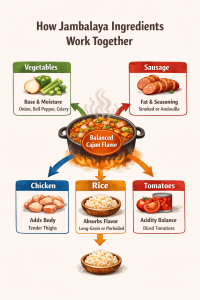
Vegetables (Onion, Bell Pepper, Celery)
The vegetables form the flavor base and provide early moisture. Onion and celery release liquid during the first stage of cooking, which prevents the dish from drying out. Green bell pepper adds mild bitterness that balances the richness of the meat and broth.
Sausage (Smoked or Andouille)
Sausage supplies fat and seasoning. As it cooks slowly, rendered fat carries smoke and spice throughout the pot. This gradual release seasons the entire dish without requiring browning or stirring
Chicken (Boneless Thighs)
Chicken thighs add body and texture. Their higher fat content allows them to remain tender during long cooking while contributing depth to the broth.
Rice (Long-Grain or Parboiled)
Rice absorbs flavor at the final stage. When added near the end, long-grain or parboiled rice soaks up the seasoned broth while staying firm and separate, which defines proper jambalaya texture.
Tomatoes (Diced)
Tomatoes provide light acidity. This acidity balances fat and starch, preventing the dish from tasting heavy after several hours of cooking.
What the Slow Cooker Changes ,and What It Does Not
Traditional jambalaya requires attention at the stove. The cook manages heat, stirs frequently, and prevents burning. Vegetables soften over direct heat, sausage browns, and spices bloom quickly in oil.
A slow cooker removes the need for constant monitoring. It provides steady heat over many hours. The cook prepares the ingredients, closes the lid, and steps away. Heat remains stable without adjustment.
This slow cooker method aligns with classic slow-cooked chicken and sausage jambalaya that rely on long, steady heat rather than constant stovetop control.
The cooking path changes, but the goal remains the same. Vegetables release moisture slowly. Sausage fat melts gradually. Spices spread evenly through the broth. Cooking occurs through gentle heat rather than direct contact.
The final texture is softer and more unified than stovetop jambalaya, but the flavor remains deep and balanced.
Slow cooker size also affects results. A 6-quart slow cooker is recommended because it allows proper liquid circulation and even heat. Overcrowding can trap steam and dilute flavor. Lifting the lid during cooking should be avoided, as heat loss extends cook time and disrupts temperature stability.
Layering Ingredients Correctly
Browning meat is optional. This recipe works as a true dump-and-go method. What matters most is the order of ingredients.
- Place raw chicken and sausage at the bottom of a 6-quart slow cooker.
- Add chopped onion, bell pepper, and celery on top.
- Sprinkle garlic, Cajun seasoning, and thyme over the vegetables.
- Pour in diced tomatoes and chicken broth.
- Add bay leaves.
- Do not stir.
This order ensures even cooking. Meat sits in liquid and stays tender. Vegetables steam and release flavor downward into the broth.
Press ingredients gently so most are in contact with the liquid. Cover with the lid.
- Cook on low for about 6 hours
- Or cook on High for about 3½ hours
Allow the slow cooker to work undisturbed.
The Critical Rice Window
Rice timing is the most important step. Rice absorbs liquid quickly and continues cooking even after heat stops.
About 30 minutes before serving, lift the lid briefly. The broth should bubble gently and smell rich. Chicken should pull apart easily with a fork. If it still feels firm, cook 15 minutes longer before adding rice.
When ready:
- Remove bay leaves
- Sprinkle uncooked rice evenly over the surface
- Stir once to distribute
- Press rice under the liquid
Replace the lid immediately, switch to HIGH if needed, and cook for 30 minutes. Do not open the lid during this stage.
Resting and Final Texture Control
After 30 minutes, turn off the slow cooker and remove the lid. Let the jambalaya rest uncovered for 10 minutes. This allows rice to finish absorbing liquid and thickens the dish naturally.
If rice is slightly firm, add a small amount of warm broth, cover, and rest for a few more minutes. Minor variation between rice brands and slow cooker models is normal.
Adjusting Heat and Protein
Jambalaya is flexible.
For mild flavour:
- Use smoked chicken or turkey sausage paired with a simple dipping sauce for chicken sausage on the side to allow heat adjustment without changing the base pot.
- Use 1 tablespoon Cajun seasoning
- Skip cayenne or fresh chiles
For more heat:
- Use andouille sausage
- Add a small amount of cayenne
- Add diced jalapeño with vegetables
Shrimp may be added during the final minutes of cooking. Chicken thighs remain the best option for long heat exposure.
Storage and Reheating
This recipe yields 6–8 servings. Allow leftovers to cool fully before storing.
- Store in airtight containers
- Refrigerate for several days
When reheating, add a small amount of water or broth and warm gently. This keeps rice from drying out.
Jambalaya can also be frozen for up to three months. Texture softens slightly after thawing, but flavor remains strong.
FAQS
Can I make chicken sausage jambalaya truly dump-and-go in a slow cooker?
Yes, chicken sausage jambalaya can function as a mostly dump-and-go slow cooker meal when ingredients are prepared correctly. Boneless chicken pieces, sliced sausage, vegetables, seasoning, broth, and tomatoes can be added at once without stirring. Rice must still be added near the end of cooking to prevent overcooking, but the rest of the process requires no supervision.
What is the best rice to prevent mushy slow cooker jambalaya?
Long-grain white rice or parboiled rice produces the best texture in slow cooker jambalaya. These rice types absorb liquid gradually and retain their structure during cooking. Short-grain or instant rice releases too much starch and breaks down quickly. Adding rice during the final cooking stage is essential to keep the grains firm and separate.
How can I adjust spice level for a family-friendly chicken sausage jambalaya?
To keep the dish mild, reduce Cajun seasoning and avoid additional spicy ingredients such as cayenne or hot peppers. Use mildly seasoned smoked sausage instead of spicy varieties. Heat can be adjusted later by serving hot sauce separately, which allows each person to control spice level without affecting the entire dish.
Can I make a low-carb or keto jambalaya in a slow cooker?
A low-carb or keto version of slow cooker jambalaya can be made by omitting rice entirely, resulting in a thicker consistency closer to a chicken and sausage soup rather than a rice-based dish. Increase the amount of chicken, sausage, and vegetables to maintain volume and texture.
What is the best way to store and reheat leftover crock pot jambalaya?
Allow the jambalaya to cool completely before transferring it to airtight containers. Refrigerate leftovers for up to four days. When reheating, add a small amount of water or broth to restore moisture and prevent the rice from drying out. Reheat gently over low heat or in short microwave intervals.
Why Chicken Sausage Jambalaya Works So Well in a Slow Cooker
Chicken sausage jambalaya in a slow cooker offers a reliable way to prepare a complete Cajun-style meal with minimal effort. Slow heat tenderizes meat, blends spices, and builds depth without constant attention.
Using a slow cooker also reduces the risk of overcooking while allowing flavors to develop gradually over several hours. The controlled temperature creates a balanced dish where chicken stays moist, sausage releases richness, and seasonings meld evenly throughout the pot.
Proper rice timing ensures a firm, hearty texture. This method respects the structure of traditional jambalaya while adapting it to modern schedules, making it suitable for family dinners and planned weekly meals.
REFERENCES
- https://www.cdc.gov/food-safety/foods/chicken.html?CDC_AAref_Val=https://www.cdc.gov/foodsafety/chicken.html
- https://www.plainchicken.com/jambalaya
Related Articles
- https://milkwoodrestaurant.com/chicken-sausages-gluten-free/
- https://milkwoodrestaurant.com/best-dipping-sauce-for-chicken-sausage/
- https://milkwoodrestaurant.com/chicken-and-sausage-jambalaya-soup-2/